
“I’m so sorry sweetheart,” I said quietly to the soft grey bird, cradled in my hands. “I’m so sorry that we killed you all.” It was a passenger pigeon, last seen alive on earth more than 100 years ago in 1914. I held my breath and waited, but the bird remained silent in my hands. Dead. Gone. Past-tense. No more.
—
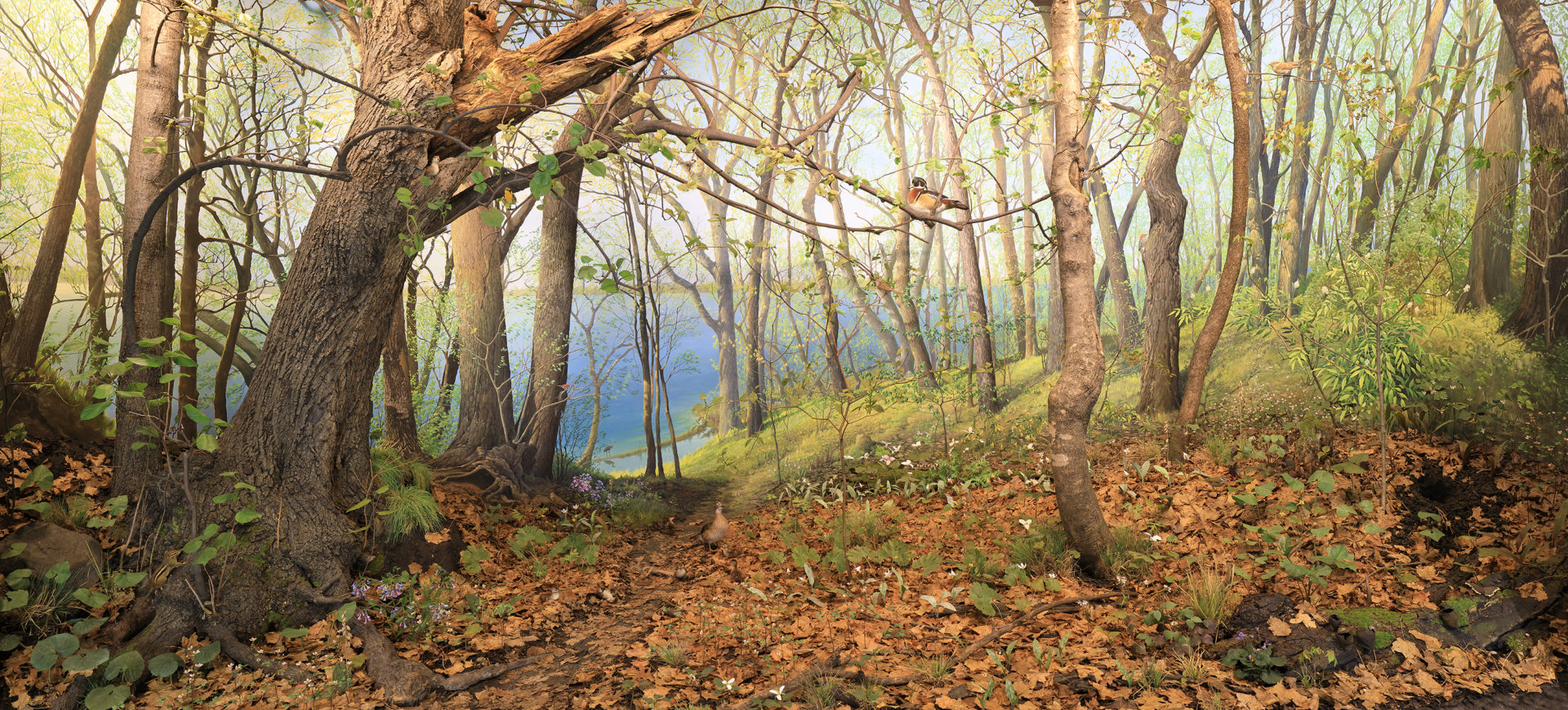
After graduate school, I spent two years working at the Bell Museum of Natural History, a stately institution, established in 1872, which is held in trust by the University of Minnesota. At the time, the museum was located in an old building on the east bank campus in Minneapolis, where its main claim to fame were the meticulously detailed, life-like dioramas, created between 1920 and 1940, many of which feature backgrounds painted by Francis Lee Jaques. There was also an impressive collection of bones, furs, and other natural artifacts in the “touch and see room,” some of which I’d bring along when teaching programs off site.

I visited the Bell Museum again last week and received a behind-the-scenes tour of the museum’s spacious new facility on the St. Paul campus, which is now a popular destination for visiting families and school groups. In a separate building nearby, the museum’s research team studies the ways animals adapt to environmental changes, the spread of zoonotic diseases, impacts of pollution, and declining species. It was here that I held the preserved bodies of three birds, now long extinct, in my hands. Passenger pigeon, Carolina parakeet, ivory-billed woodpecker – all gone.
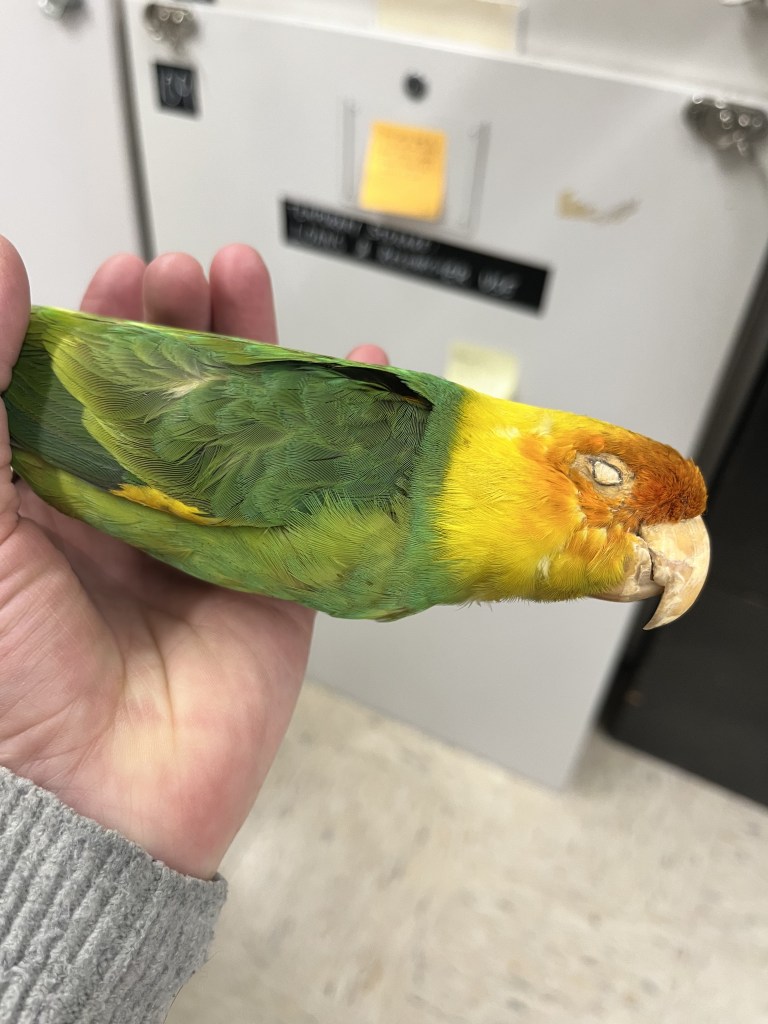
The passenger pigeon was once a common backyard bird that formed flocks so dense and abundant that people said they blackened the sky. When traveling from Henderson to Louisville, Kentucky in 1813, John James Audubon, the famous artist and ornithologist, wrote that, “The air was literally filled with Pigeons; the light of noon-day was obscured as by an eclipse, the dung fell in spots, not unlike melting flakes of snow; and the continued buzz of wings had a tendency to lull my senses to repose… Before sunset I reached Louisville, distant from Hardensburgh fifty-five miles. The Pigeons were still passing in undiminished numbers, and continued to do so for three days in succession.”
Though numerous, the passenger pigeon’s enormous flocks made them an easy target for hunters, who killed them by the hundreds. When timber companies began clearing the northern forests, the pigeons were concentrated into ever-shrinking patches of habitat, making them even easier to hunt. The last known passenger pigeon, named Martha, died in captivity at the Cincinnati Zoo in 1914 at the age of 29.
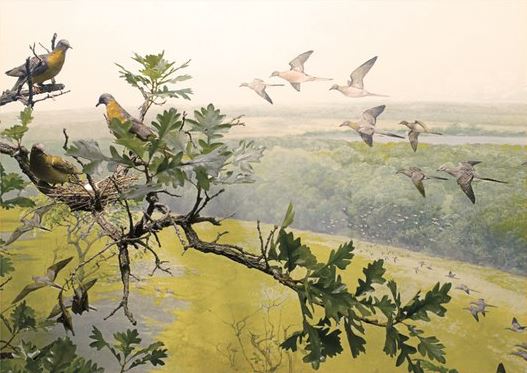
The Carolina parakeet was a small, brightly colored parrot native to North America that lived as far north as Wisconsin. Its habitats were old-growth wetland forests along rivers and in swamps and its populations collapsed in the wake of the logging era. The last known wild Carolina parakeet was killed in 1904, and the last captive, a male named Incas, died in 1918.
Most recently, the ivory-billed woodpecker could be found living in southern forests from Texas to North Carolina. It was first listed as an endangered species by the U.S. Fish and Wildlife Service in 1967 and its last universally agreed upon sighting was in Cuba in 1987. Today, the ivory-billed woodpecker is presumed extinct, though some people still hold hope that a bird or two remains in the wild.


In the Bell Museum’s research collections, feathers, fur and bones preserve the past and help scientists make predictions for the future. In one drawer, there is a collection of marsh wrens, the largest in the world. One species lives year-round in Mexico, while another, almost identical in appearance, spends its summers in Minnesota, the Dakotas, and northern Canada. Another drawer holds opossums – North America’s only marsupial, and an animal that is steadily expanding its territory further north in Minnesota.
Now, the Bell Museum has issued a call to the general public to help “crowd source” birds and wildlife from around the state that have died from window strikes, car collisions, and other causes. The program, Salvage Wildlife, aims to turn tragedies into scientific data by using these animals to help understand how species are growing or declining. Museum researchers are particularly interested in studying specimens from Greater Minnesota and say no bird or mammal is “too common” to be donated. After all, the passenger pigeon once numbered three to five billion, and now there are none.
To learn more about the Salvage Wildlife program and how you can legally collect and donate deceased creatures you might find, visit: www.bellmuseum.umn.edu/salvage-wildlife.

 East Metro Water